
Proof Loop: same-prompt post-ship observations
After a recorded shipment, the Proof Loop re-tests the same configured prompts on a schedule and reports what those runs returned, including citation status, rank, and share of voice. A fixed configuration and pre/post split make the observations easier to compare, but they cannot show whether the shipment moved the brand into an answer or separate it from model, index, source, and run-to-run changes.
More: Intro to RankEcho · How it works · Full walkthrough · Written product guide
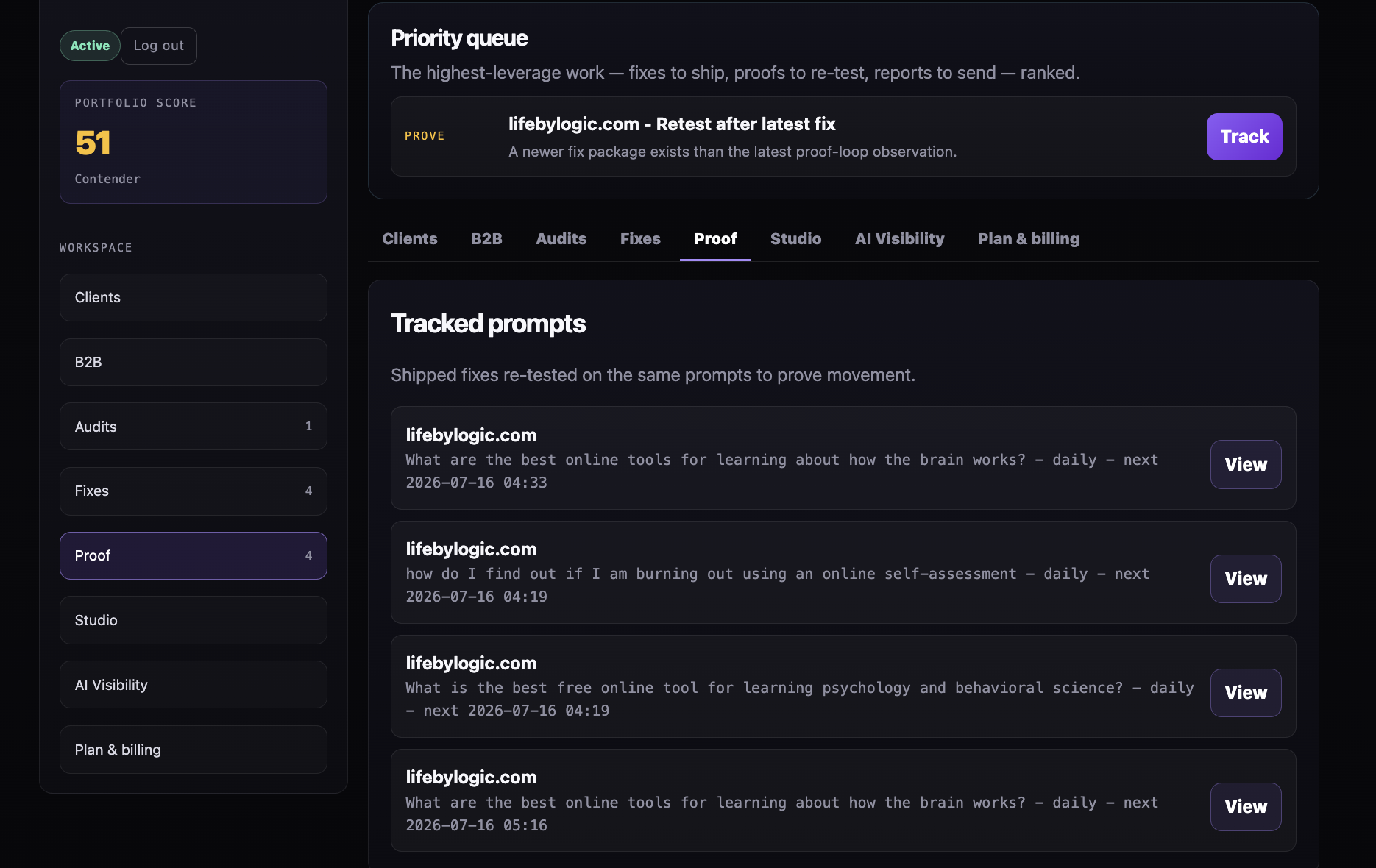
Track the prompt you fixed
After shipping, track the exact prompt the fix addresses. RankEcho records the baseline - how engines answered before - so later movement has a fixed point to be compared against.
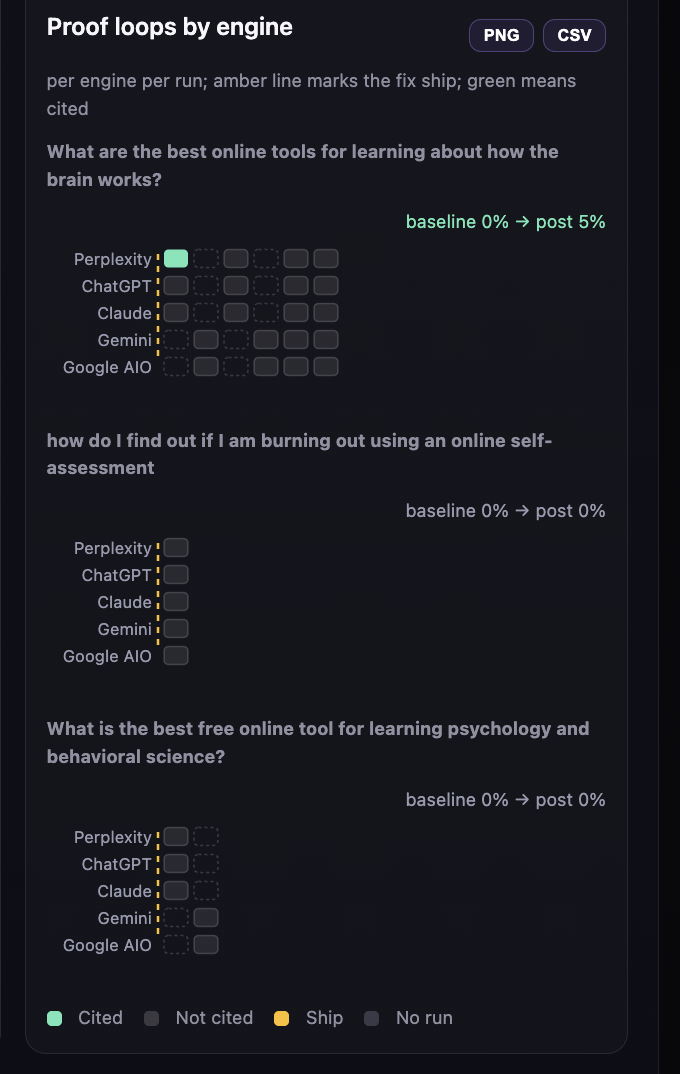
Scheduled re-tests run per engine
The Proof Loop re-asks the same prompt on schedule across engines. The proof grid shows one row per engine and one column per run: green means cited, the amber line marks your ship date.
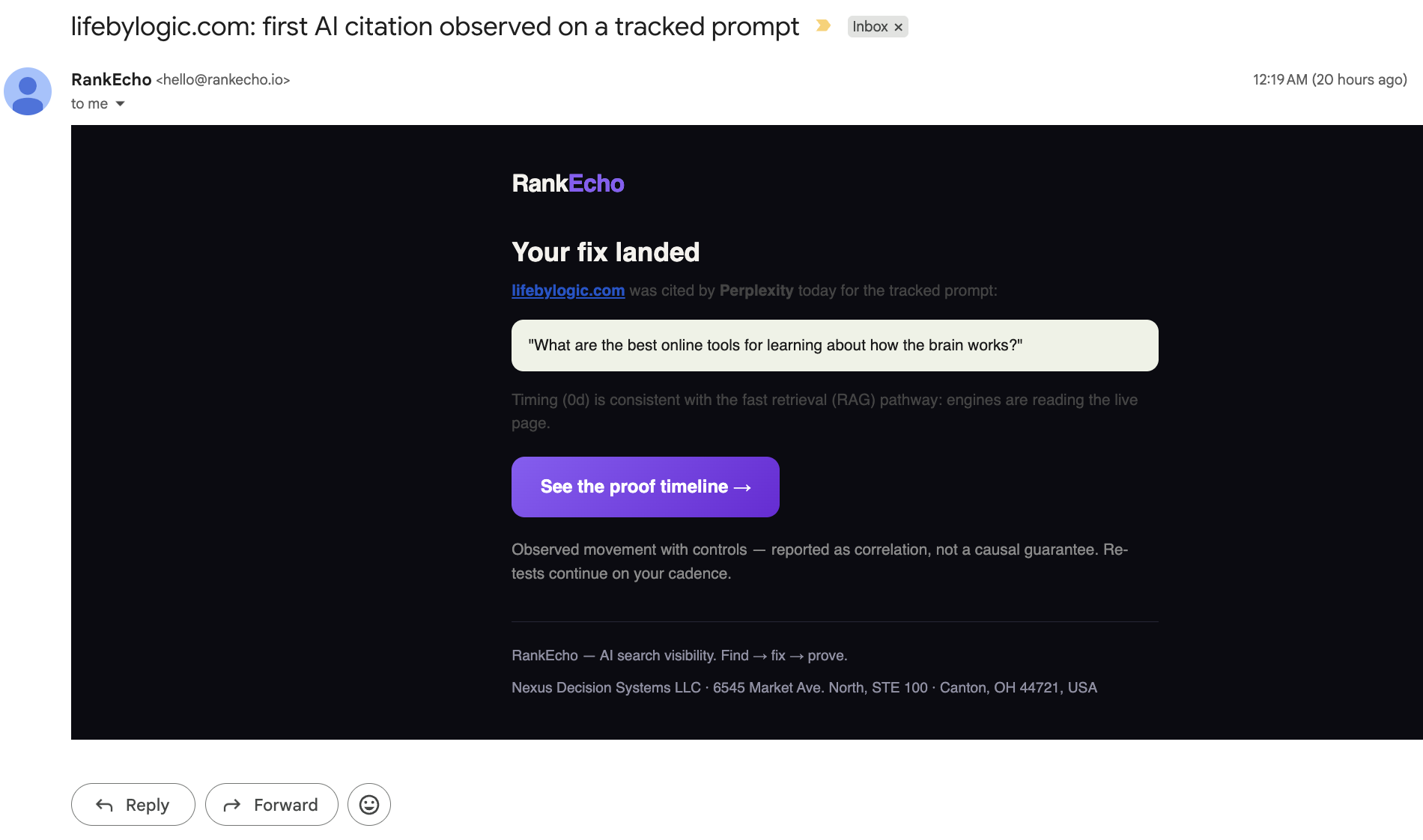
Get the citation alert
When a tracked run first returns an owned citation, RankEcho emails the timestamped observation and run details. The alert records what appeared; it does not say the shipment caused it.
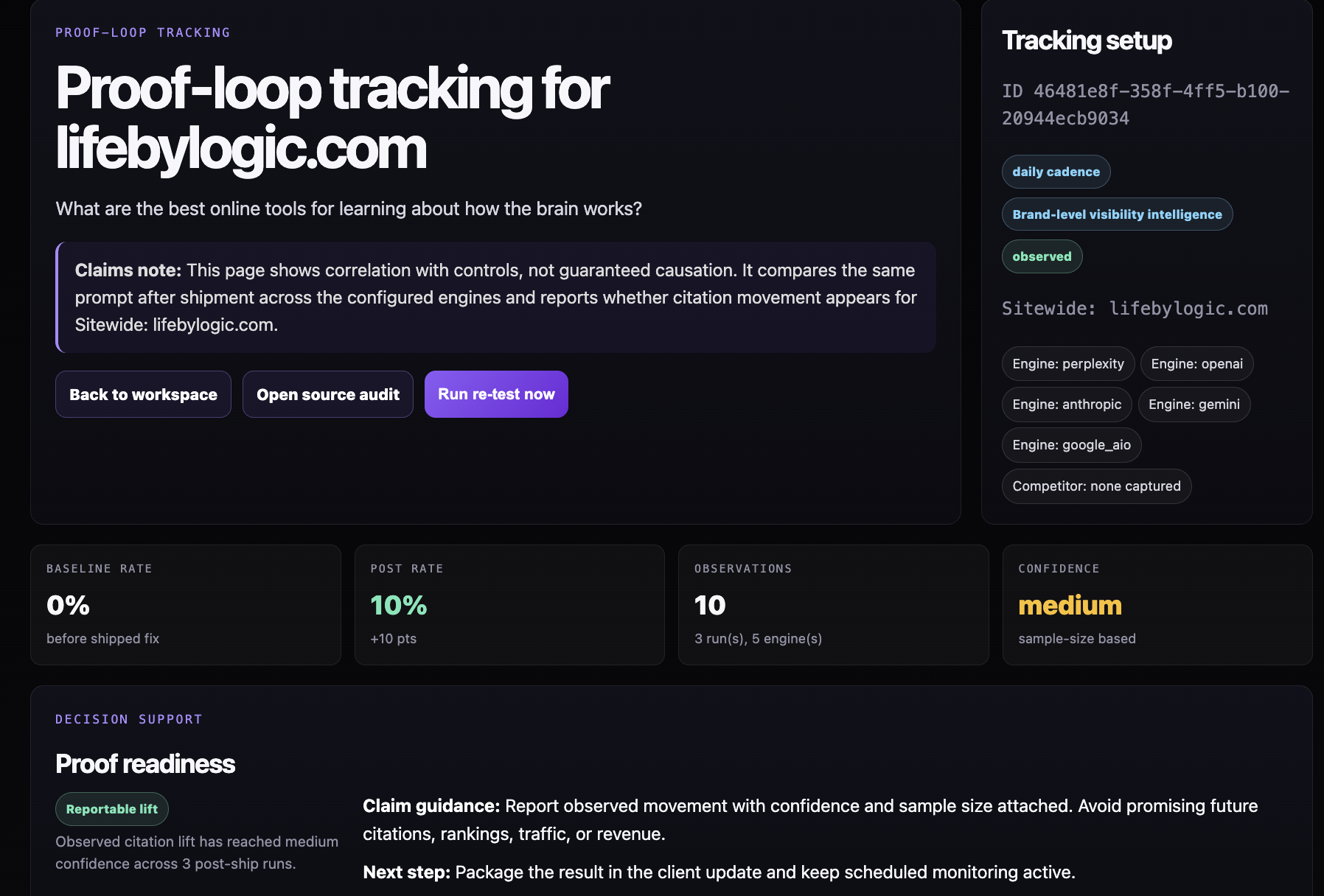
Read the before and after
The proof page reports baseline versus post-ship citation rate with observation counts, sample-status language, and volatility context. The comparison is labeled as correlation rather than causation.
Why a loop, not a snapshot
A single audit records one point in time. AI answers can change as the web, indexes, models, and run conditions change, so a one-off result can mislead in either direction. Re-running the same configured prompts creates a sequence a reader can inspect, with its sample and variability limits left visible.
How it works
The discipline that makes observations more comparable:
- Hold the prompt set, engines, and available run configuration fixed.
- Record a baseline before any change.
- Record each shipment separately; limiting simultaneous changes can reduce ambiguity but does not establish attribution.
- Re-test on a recorded cadence and preserve the before-and-after observations.
Measurement
RankEcho reports correlation with controls — a fixed prompt configuration, recorded shipment, and strict pre/post split — not causation. It shows observation counts and sample or volatility limits rather than treating sample size as statistical confidence. Sparse or inconsistent observations remain limited or unknown instead of becoming a win claim.
The product sequence does not calculate the manual exact-URL persistence measure. That separate method conditions on a frozen target-URL-positive cohort across consecutive eligible windows and reports observation gaps apart from losses.
A record you can show
The output is a before-and-after record for a stakeholder or client: the sampled prompts, what shipped, and what later runs returned. It documents the sequence and its limits without claiming the work caused the observed movement.
Frequently asked questions
On the recorded cadence configured for the track. Repetition supplies more observations, but cadence alone does not separate a shipment from ordinary answer variability.
No. It reports a same-prompt before-and-after comparison with a recorded ship date and pre/post split. That is correlation with controls, not causal attribution.
The record stays limited or unknown and shows the underlying observations. Repetition does not turn an inconsistent series into a causal or statistically confident result.