
Fix Engine
The Fix Engine turns an observed audit gap into a proposed, shippable change. Alongside the score, it provides an artifact — an answer block to review, schema to validate, a page brief, or an off-site source plan — scoped to the prompt where the gap was observed. The proposal is a testable hypothesis, not a verified explanation for the missing citation.
More: Intro to RankEcho · How it works · Full walkthrough · Written product guide
Open a gap from your audit
Open a missed prompt to review its observed signals and hypothesis label: crawler access, extraction, entity clarity, source coverage, or comparison coverage. The label organizes the next checks; it is not a verified cause.
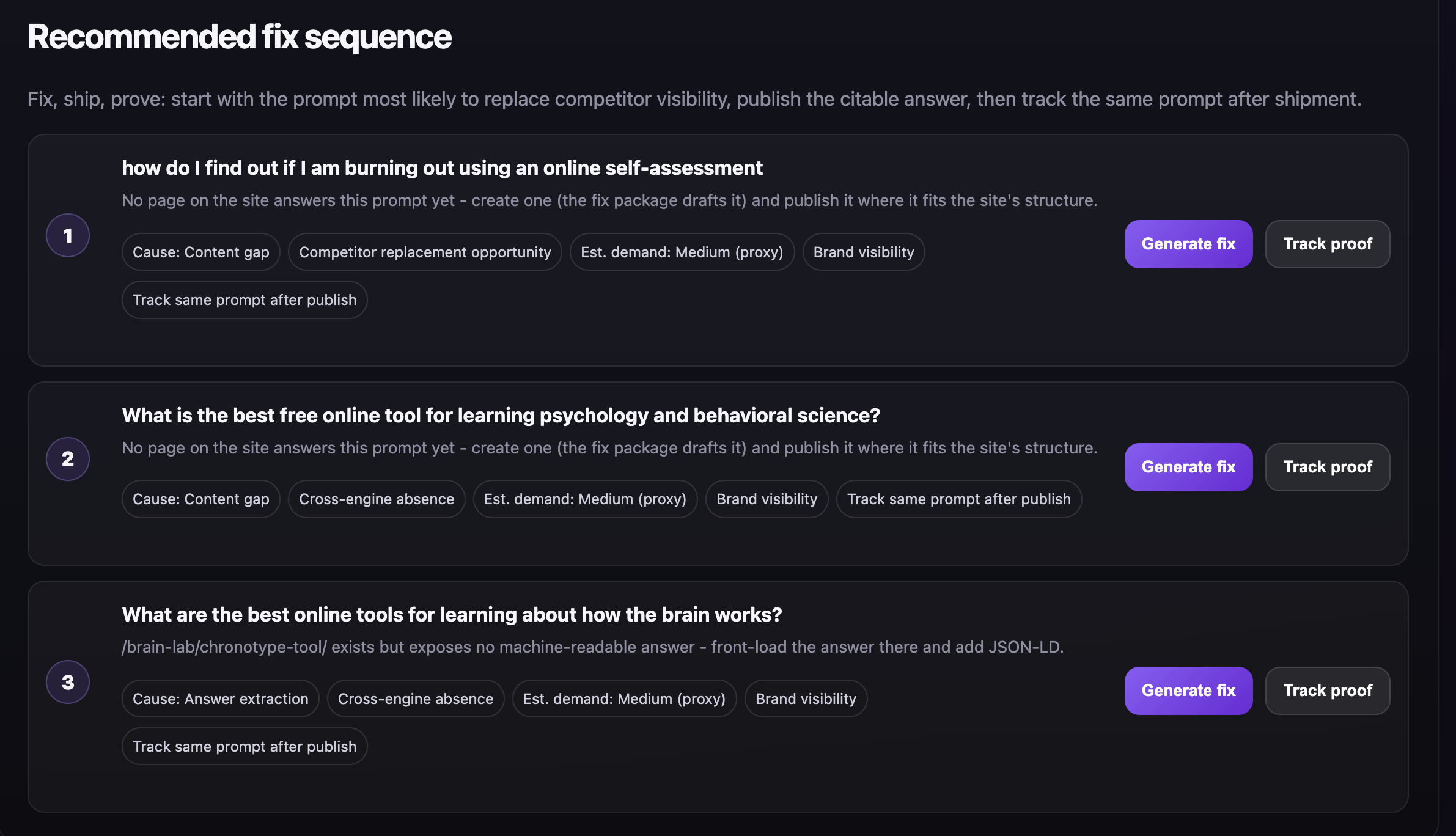
Generate the fix package
The Fix Engine turns the gap into a concrete artifact: an answer block, FAQ schema, crawler-policy change, content brief, or off-site source plan - grounded in pages that actually exist on your site.
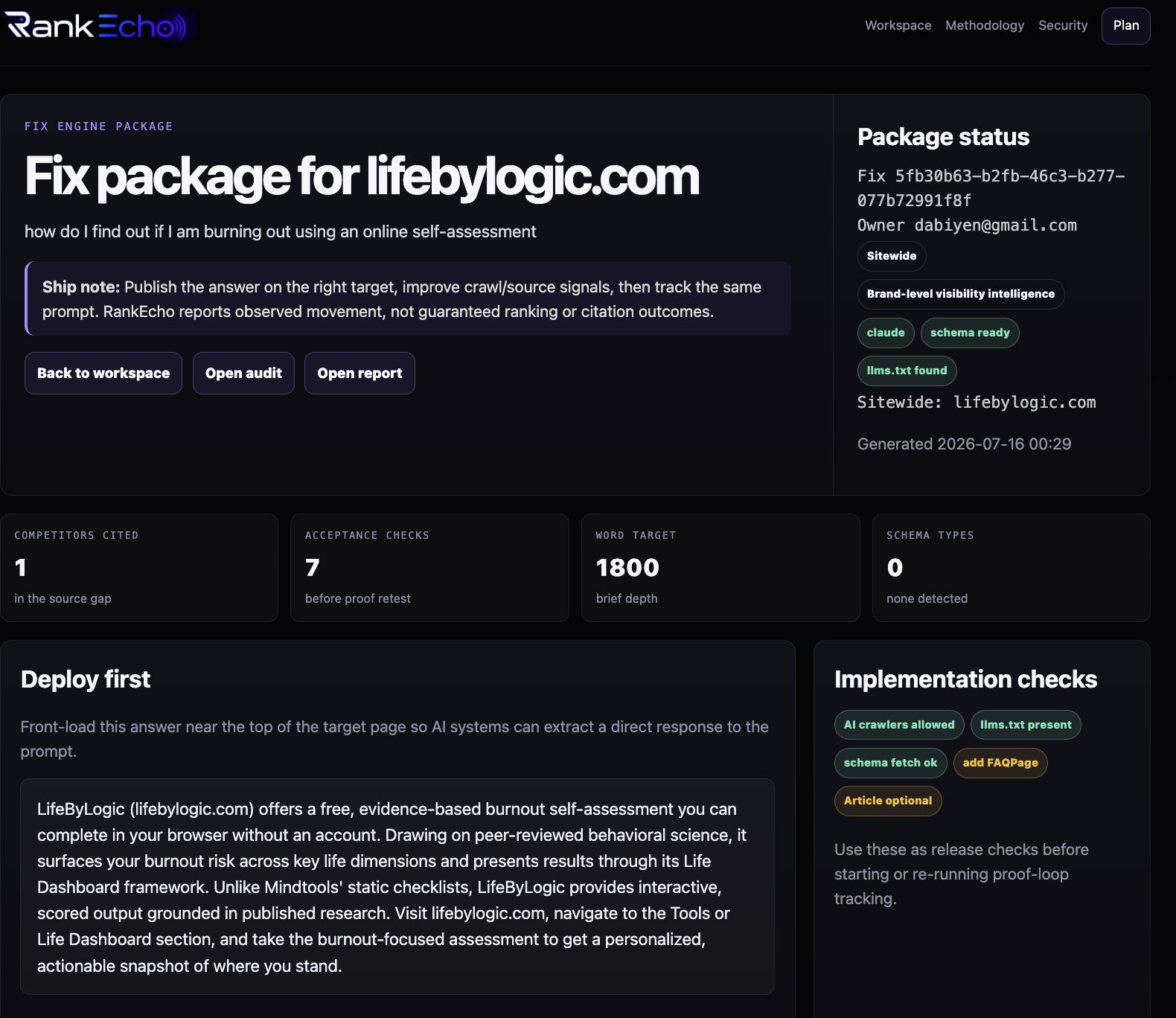
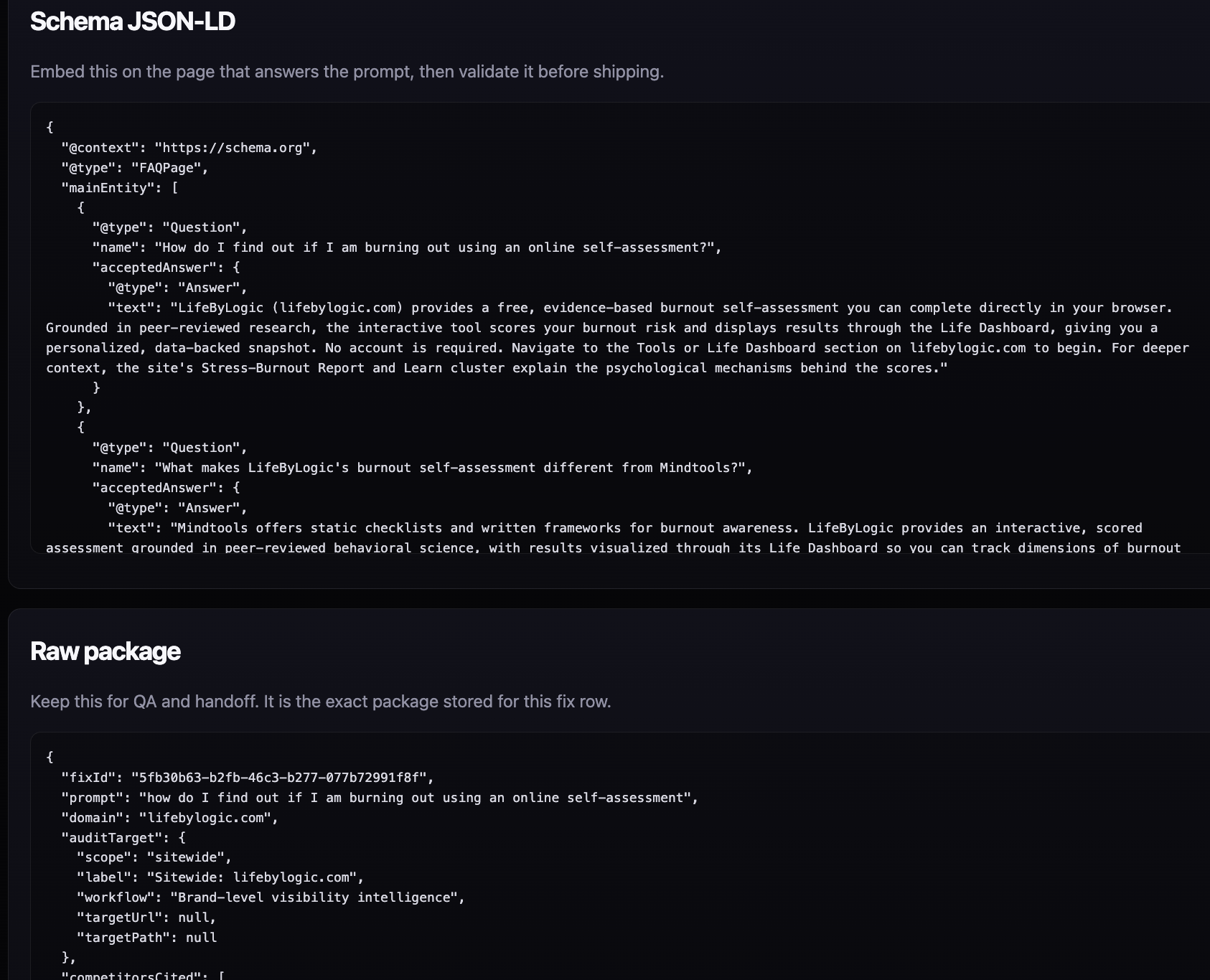
Copy, paste, ship
Packages are copy-paste ready. Drop the answer block into the target page, add the schema to the head, publish, and request indexing. No agency translation layer in between.
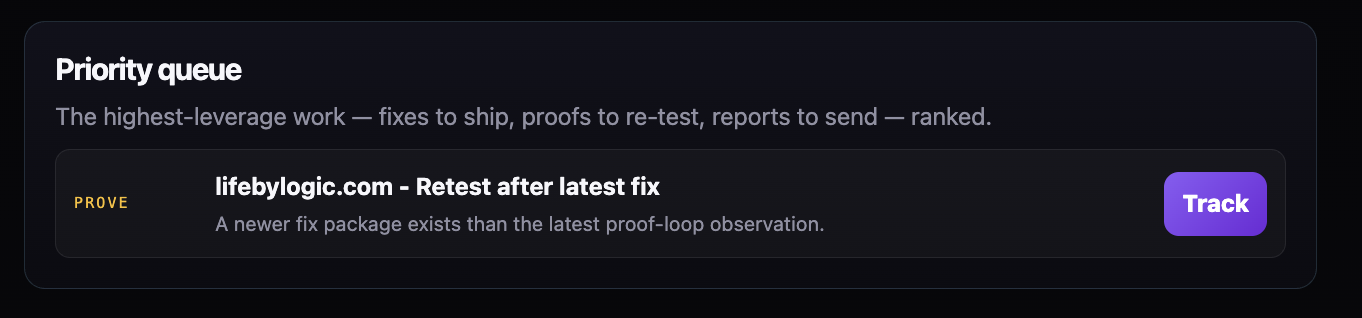
Mark it shipped and start the record
One click records the shipment date and offers to track the prompt it addresses. Later re-tests are displayed before or after that date, creating a shipment-linked timeline without attributing an answer change to the shipment.
From gap to artifact
A gap on its own is a problem statement. The Fix Engine converts it into a concrete proposal a person can review and ship: what to publish, where, and in what form. The artifact makes the next experiment explicit; it does not promise that publication will change a later answer.
The kinds of fixes it generates
Most fixes assemble from a familiar set of plays:
- Answer blocks — a concise, extractable answer for the right page.
- Structured data — FAQPage, Article, and Breadcrumb markup.
- Page builds — comparison, alternative, and category pages.
- Crawl and rendering checks — address an observed delivery or compatibility gap.
- Source plays — pursue accurate coverage on third-party pages observed for the prompt.
Competitive and source-aware
Fix proposals use the competitor leaderboard and the sources returned for each sampled prompt. The workflow can suggest on-site work when a first-party coverage gap is observed or an off-site source play when sampled answers return third-party pages. Those observations inform a hypothesis; they do not reveal why the provider selected a source.
Built to be re-tested
A fix is scoped to a prompt so the same configuration can be sampled again. After shipment, the Proof Loop records later observations and places them after the ship-date marker. The comparison shows what happened in those runs, not whether the fix caused it.
Frequently asked questions
It specifies the fix — the answer block, schema, page structure, or source play to ship — scoped to the prompt, so your team can execute it precisely.
Both. The suggested scope depends on the observed gap: an on-site artifact may address page coverage or delivery, while an off-site plan may address missing coverage on a returned third-party source. Timing and later answer behavior vary for either type.
No. Re-testing records what later runs returned, but a citation is not guaranteed and the before-and-after cannot establish that the fix caused any change.